
Search "how to detox your liver" and you'll get two answers that contradict each other. One promises a weekend juice flush that resets the organ overnight. The other treats every detox claim as hype and walks away.
Both miss the point. Your liver is the detox organ. So "detoxing your liver" really means supporting the system that already does the work, every hour of every day. That distinction changes everything about what helps, and it's where most advice falls apart.
If you want to skip ahead to products built around daily support, you can browse the full lineup. But the strongest routine starts with daily habits, with botanicals working best as a consistent support layer.

How Your Liver Actually Detoxifies
Your liver is the body's natural detoxification system. It filters waste, processes nutrients, and converts compounds your body can't use into forms it can eliminate. This happens continuously, whether you think about it or not.
The work runs in two phases.
-
In Phase I, enzymes convert toxins into intermediate compounds.
-
In Phase II, the liver attaches molecules to those intermediates so they become water-soluble and ready to leave the body through bile or urine. Bile flow carries much of that waste out through the digestive tract.
Here's the misconception worth clearing up. Toxins don't sit "stored" in your liver waiting for a cleanse to flush them loose. The liver clears compounds as they arrive, in real time. There's no backlog accumulating in a tank. So the goal isn't to purge something stuck. It's to keep that ongoing processing well-supported.
That reframing sets up everything below. Once you stop thinking about flushing and start thinking about support, the useful advice gets a lot clearer.
What Liver Support Actually Looks Like
This is the real decision behind your search, so it gets the most attention here. The question isn't "do detoxes work." It's "what consistently supports the organ that detoxes for you."
There's a clean line to draw. A crash juice flush or a "purge your toxins on demand" cleanse is the fad worth skipping. There's no overnight reset, and nothing in a three-day cleanse reverses damage from years of overconsumption. Consistent daily support of your liver's own pathways is the approach with actual merit.
The popular "rapid cleanse" idea overpromises in a specific way: it sells a quick fix for something that responds only to steady habits. No single flush undoes accumulated strain, and some extreme, laxative-heavy, or restrictive cleanse products can stress the body rather than support the liver.
Keep the takeaway on the support side. Your liver doesn't need a crash flush. It needs daily support of the work it's already doing.
Daily habits that carry the most weight
The habits below do more for healthy liver function than any cleanse, because they reduce the load and support the mechanisms the organ relies on.
-
Hydration keeps bile flowing and helps the kidneys and liver clear waste efficiently.
-
Sleep matters more than most people realize. Poor sleep measurably impairs the liver's processing capacity, and chronic stress does the same by raising inflammation.
-
Limiting alcohol is the single highest-impact lever. Alcohol is processed by the liver, and cutting back reduces the oxidative stress that drives alcohol-related liver disease.
-
Moderating ultra-processed food, added sugar, and fructose protects against fat buildup. Excess fructose is converted to fat in the liver, a key driver of non-alcoholic fatty liver disease (now reclassified as MASLD).
-
Regular movement improves insulin sensitivity and helps the body manage fat metabolism, which eases the metabolic load on the liver.
None of these is dramatic. That's the point. Liver support is cumulative, and consistency beats intensity every time.
Foods that support the liver's pathways
Certain foods give the liver's two-phase process the raw materials it uses. Think of these as supporting Phase I and Phase II rather than "flushing" anything.
-
Cruciferous vegetables like broccoli, cabbage, and Brussels sprouts supply sulfur compounds that support Phase II conjugation.
-
Antioxidant-rich produce such as leafy greens, beets, and berries helps counter the free radicals generated during detoxification.
-
Coffee and green tea are associated with a lower risk of liver disease in large observational studies, one of the better-supported dietary links in liver research.
-
Fiber supports elimination by helping move bile-bound waste out through the digestive tract.
No single food flushes the liver. The benefit comes from a cumulative dietary pattern, the kind a Mediterranean-style diet builds over months, not a one-time "liver cleanse juice." There are some homemade liver detox drinks that you can try, using studied natural ingredients you may already have at home.
Botanicals Studied for Liver Support
Beyond food, several botanicals show up in liver research and on supplement labels. It helps to know what the evidence says for each, stated plainly rather than oversold.
Milk thistle is the most-studied of the group. Its active compound, silymarin, acts as an antioxidant and has human data on liver enzymes like ALT and AST, though results are mixed, and effect sizes are modest.
For a closer look at this herb, our guide to milk thistle in liquid drop form covers it in more detail.
There is a long history of traditional use of dandelion root for liver and bile support, with mechanistic plausibility around bile stimulation and mostly preclinical data so far. Turmeric, through its compound curcumin, is studied for anti-inflammatory and antioxidant activity relevant to liver cell support. Artichoke extract is associated with bile production and has some early human data. Chicory root and berberine also have studied benefits for liver and metabolic health.
Where the evidence is preliminary or limited to animal models, treat the claims accordingly. Traditional use and mechanistic plausibility are reasons a botanical is studied, not proof of a clinical effect.
The honest summary: these are botanicals with real research interest and varying levels of human evidence, not proven cures.
Where a formulated supplement fits
People often choose a combined botanical formula over buying each herb separately for practical reasons: consistent dosing, standardized extracts, and the convenience of one daily routine instead of four. That's the case for a formula rather than a pitch for one.
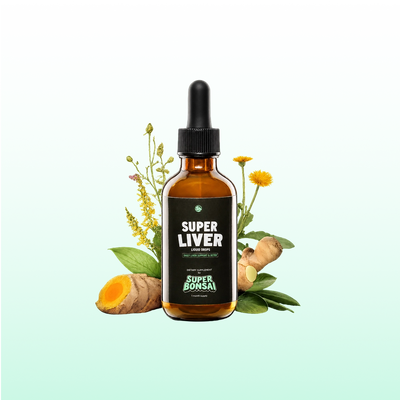
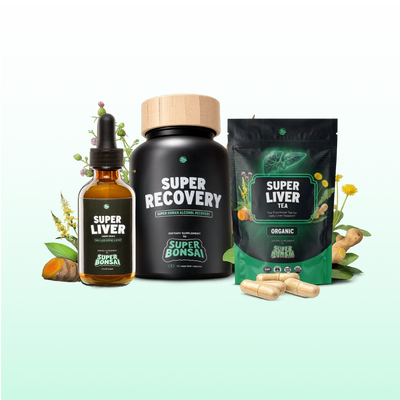
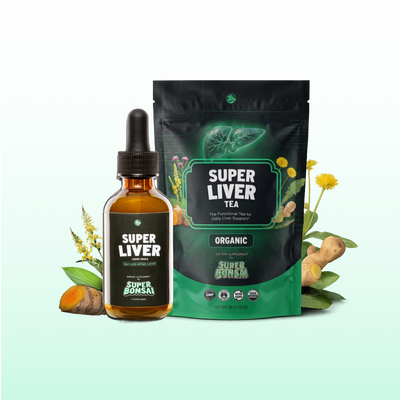
Super Liver is an example of this approach: a milk thistle tincture combining other studied ingredients like dandelion root and turmeric and others in a single daily formula. The ingredients are designed to work as complementary parts of a support routine rather than competing actives.
If you'd rather weave support into a habit than swallow a capsule, Super Liver Tea offers the same daily-support idea in a gentler ritual format, allowing you to sip a healthy liver tea as a part of your daily routine. Either one fits the same role: a consistent layer on top of the foundational habits, not a substitute for them.
Signs Your Liver Needs Attention (and When to See a Doctor)
A real worry drives many of these searches, so it's worth addressing directly and carefully. The signals people associate with sluggish liver health include persistent fatigue, brain fog, bloating, and digestive discomfort. These are nonspecific. They overlap with dozens of unrelated causes and aren't a basis for self-diagnosis.
More specific warning signs, like jaundice (yellowing of the skin or eyes) or dark urine, warrant prompt medical attention.
Here's the responsible bottom line. If you have persistent symptoms, known risk factors, or any concern about liver damage, see a clinician and ask about proper screening, which can include a liver function test or ultrasound. A hepatologist or gastroenterologist can interpret what's happening.
Supplements and habits are support, not treatment, and nothing here makes overconsumption consequence-free. Talk to your doctor before starting any supplement, especially if you take medications or have an existing condition.

Building a Realistic Liver-Support Routine
Pull it together into something you can run day to day. A sustainable rhythm looks less like an event and more like a default setting.
-
Daily: Hydrate steadily, eat a fiber-rich and antioxidant-rich diet, and get real sleep.
-
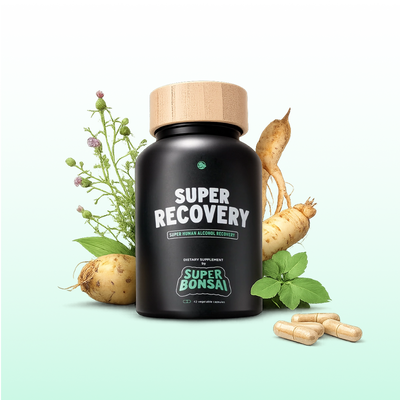
Around drinking: Moderate your alcohol intake, since this is the lever with the most direct effect on liver load. If you are drinking, consider a DHM supplement like Super Recovery to ease the burden on your liver.
-
Weekly: Build in regular movement, and keep ultra-processed food and added sugar to the edges of your week rather than the center.
-
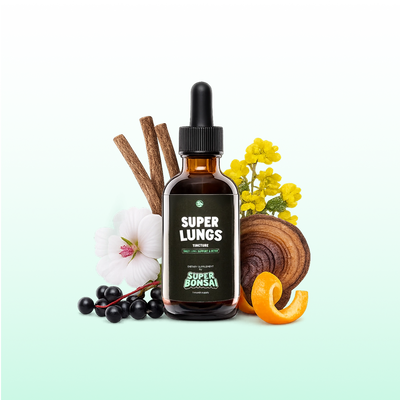
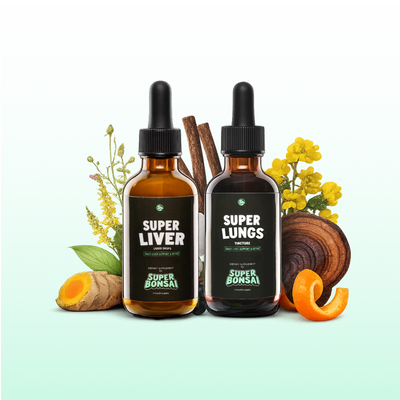
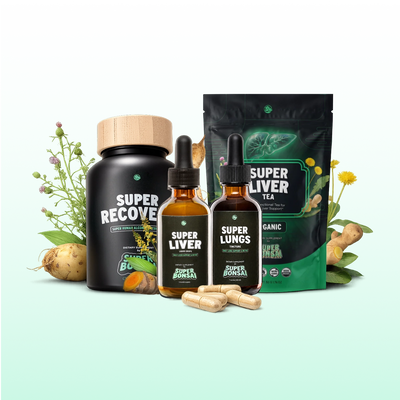
Optional support layer: A daily botanical formula like Super Liver or Super Liver Tea can sit on top of those habits as a consistent-support layer, not a cleanse event. For whole-body support, the Detox bundle pairs liver and lung support in one routine.
The throughline holds across all of it: consistency over intensity. Supporting the system your body already runs is more useful than relying on a short-term flush, because liver support works best through consistency. Supplements like milk thistle can be taken daily to offer that consistent support.
The Bottom Line
Detoxing your liver isn't a weekend project. The organ already detoxifies continuously, so the honest version of "how to detox your liver" is a question about support: hydration, sleep, moderated alcohol, a sensible diet, movement, and optionally a daily botanical formula that backs up those habits.
Build the routine. And when symptoms or risk factors point to something real, see a doctor rather than a juice cleanse. The liver does remarkable work on its own. Your job is to make that work easier, one consistent day at a time.
Disclaimer: These statements have not been evaluated by the Food and Drug Administration. This product is not intended to diagnose, treat, cure, or prevent any disease.