

Dandelion root shows up in nearly every liver support supplement on the market, including our own. Most articles treat dandelion root benefits as a dozen disconnected bullets. The picture is simpler. This is a bitter, bile-moving, prebiotic root, and nearly everything it does traces back to those three properties.
Bitter compounds nudge bile flow, the starting point for both digestion and liver support. Inulin, a prebiotic fiber, feeds the gut bacteria your liver ends up living with. And the root's traditional reputation as a gentle diuretic has at least a little modern data behind it.
That framing separates what the root can do for digestion and the liver's daily workload from what no herb can do. We use dandelion root across our liver health formulas for exactly those properties, and the evidence behind each one is below.

What's in Dandelion Root
Dandelion is Taraxacum officinale, a member of the Asteraceae family, and the root is its own subject. The leaf and flower carry different compounds, so an article about "dandelion" that never says which part it means is already on shaky ground. This one is about the root.
The root's main constituents: inulin, a prebiotic fiber that peaks in fall-harvested roots; taraxasterol and related triterpenes; chicoric and chlorogenic acid; sesquiterpene lactones, the bitter compounds; and a fair amount of potassium.
Western herbalism and Traditional Chinese Medicine both used the root for centuries as a bitter digestive and liver herb. The name traces to the French dent-de-lion, lion's tooth, and the species name officinale marks a plant with a historical medicinal role.
The chemistry matches the history.
Bile Flow, Fat Digestion, and Daily Comfort
Start with the mechanism the evidence supports best. The bitter sesquiterpene lactones in dandelion root stimulate bile production and flow, an effect researchers call choleretic. Animal studies, opens in a new tab have documented increased bile production after dandelion root, though there are no human clinical trials for liver or digestive uses.
Bile deserves a plainer explanation. Your liver makes it, your gallbladder stores it, and it breaks dietary fat into droplets your body can absorb while carrying processed compounds out through the digestive tract. Good bile flow keeps things moving in both senses.
This is why the effects people report are so mundane and so specific: less heaviness after fatty meals, digestion that feels less sluggish, less bloating. It's also why herbal traditions take bitters before a meal. The bitter taste itself triggers a digestive response, so timing is part of the mechanism.
Bile is also where much of the liver's output physically leaves the body. When people talk about supporting natural detox pathways, the exit route is bile into the gut. A root that promotes bile flow supports that final step, which is why bitter roots keep appearing in liver formulas century after century.
Animal and lab studies document the bile effect, human trials are small and few, and the traditional record is long. That mix supports a daily digestive habit without overpromising a clinical outcome.
Bile-stimulating herbs are the wrong choice for anyone with gallstones or a blocked bile duct. More on that in the safety section below.
How Dandelion Root Supports the Liver
Most published research on dandelion and the liver comes from cell and rodent models, layered on long traditional use. Read each finding for what was measured; across the board, more human research is needed.
Antioxidant Activity and Liver Tissue
Dandelion root carries polyphenols, including chicoric and chlorogenic acid, that act as antioxidants: compounds that help manage free radicals and the oxidative stress they create. Oxidative stress is one of the ways daily life strains liver tissue, which makes antioxidant activity a sensible thing to study.
A 2025 review collected rodent studies where dandelion extracts and taraxasterol reduced markers of chemically induced liver stress. In plain terms, researchers stressed liver tissue with a chemical insult, gave the extract, and measured lower stress markers. The models use doses and insults that don't map cleanly onto a daily human serving.
Fat Processing and Metabolic Markers
Animal studies have also looked at how liver tissue processes fat and at insulin sensitivity, with chicoric acid drawing much of the attention. The most-cited studies in this area were run with leaf extract in mice, and root-specific data is thinner.
The mechanism ties back to the section above. Fat processing is the shared thread: bile emulsifies dietary fat, and the same compounds that move bile show up in studies on how the liver handles fat. There are no large human trials here, so treat this as a plausible mechanism with early animal support
Blood Sugar and Insulin Response
Here the interesting compound is inulin. In a 2018 randomized trial, 24 grams of inulin per day lowered post-meal glucose and insulin in overweight men and increased short-chain fatty acid production. A separate trial in healthy adults found the fatty acid increase without any glucose difference, so the results are mixed even where inulin is best supported.
That 24-gram dose is far beyond what any dandelion product delivers, and dandelion-specific human data on blood sugar is thin. This is about how prebiotic fiber shapes a normal post-meal response in healthy people, and nothing here speaks to managing any diagnosed condition.
Inflammatory Response
Taraxasterol and the sesquiterpene lactones have been studied in inflammatory signaling models, opens in a new tab, where they modulated markers tied to a healthy inflammatory response. This is almost entirely cell-level work, so a short mention is the proportionate one.
Inulin and the Gut-Liver Connection
Dandelion root is one of the richer plant sources of inulin, a prebiotic fiber, which means your gut bacteria ferment it as food. Inulin-type fructans are among the best-established prebiotics, opens in a new tab, with a consistent effect on beneficial gut bacteria across human studies.
Why does the gut show up in a liver article? Blood from your gut drains to the liver through the portal vein, opens in a new tab, so the liver meets whatever your gut sends it, all day. A steadier gut microbiome means steadier input for the liver, which is how gut balance ends up in liver conversations.
The practical note: inulin can cause gas or loose stools when you introduce it too fast. Start low and build, especially with roasted root tea or high-inulin extracts. This is the most common reason a new dandelion habit feels rocky in week one.
It's also why we pair dandelion root with chicory root, another inulin-bearing root, in Super Liver. The two cover the bile side and the gut side of the same pathway.
Water Retention and the Diuretic Effect
This is the one benefit with real human data, and precision matters. A 2009 pilot study, opens in a new tab of 17 healthy adults found increased urinary frequency and volume over a single day after dandelion extract. The extract was leaf; the root is used similarly by tradition.
Keep the study in proportion too: seventeen people, one day, no blinding, and no replication since. It documents a mild, short-term effect and nothing more.
What can a mild diuretic effect do for you? It can shift short-term water weight and take the edge off puffiness. It has no effect on body fat, and the scale change reverses when you rehydrate. Anyone hoping for fat loss from a diuretic is set up for disappointment.
Dandelion's potassium content comes up in every version of this conversation, since some prescription diuretics deplete potassium. It's a fair point about the plant's nutrient profile. Still, an herb never substitutes for a medication your doctor dosed for a reason; if you already take a diuretic or lithium, read the safety section first.
Root vs. Leaf, and Which Form Delivers What
Root and leaf are different products. The root is higher in inulin and the bitter compounds; the leaf carries more of the diuretic tradition, along with more vitamin K. When a label or an article says "dandelion" without a part, you can't know which set of properties you're buying.
Roasting develops the coffee-like flavor that makes dandelion coffee work as a caffeine-free substitute, but heat changes the compound profile, and how much of each compound survives isn't well mapped. A roasted cup and a raw-root extract are different doses of different things.
What each form delivers:
-
Tea and roasted root: gentle and ritual-friendly, with a variable dose per cup. The inulin comes through, while less water-soluble compounds only partially extract. Our dandelion tea guide covers the tea side in depth.
-
Capsules and powder: convenient and fixed-dose, but ground root powder and a concentrated dandelion root extract are different strengths, so label wording matters.
-
Extracts and tinctures: concentrated, with ratios like 10:1 meaning ten parts root to one part finished extract. A liquid also hits the bitter receptors on your tongue, the trigger for the digestive response, which matters for a bitter herb.
-
Whole food: dandelion greens or roasted-root blends deliver small, nutritional doses rather than functional ones.
Reading a label, check five things: which plant part (root, leaf, or "aerial parts"), the extract ratio, any standardization claim, third-party testing, and whether the dose is disclosed or hidden inside a proprietary blend.
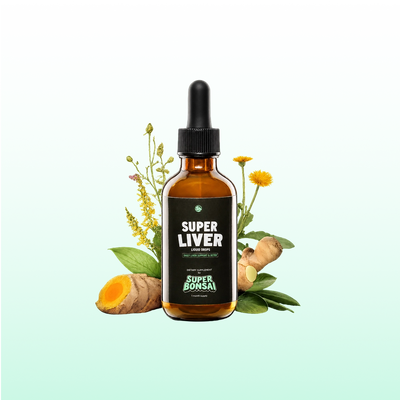
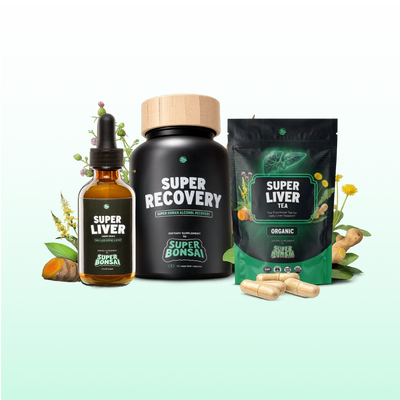
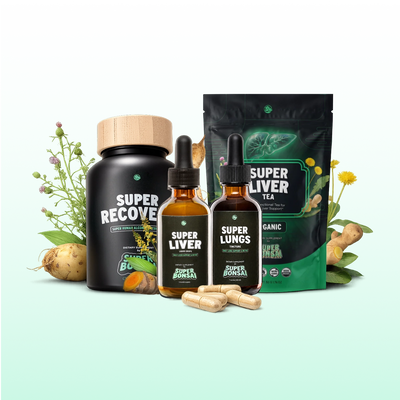
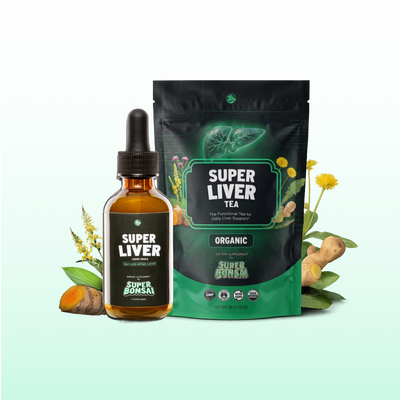
As a worked example from our own shelf: Super Liver is a 10:1 concentrated liquid extract, third-party tested, with a disclosed 2 mL daily serving, and the label names each of its seven herbs, dandelion root included. That's the shape of label transparency to look for, whoever you buy from.
How Much to Take, and How Long Before Anything Changes
There is no established clinical dose for dandelion root, and any article that names one confidently is overreaching. What you'll see across traditional references and commercial labels: a few grams of dried root brewed as tea, powdered root in the 250 to 1,000 mg range, and fluid extracts around 5 to 10 mL daily.
Timing follows the bitters tradition: before meals, so the taste can do its digestive work. Liquid extracts go under the tongue or into water; under the tongue gives the bitter receptors more contact.
Set your timeline expectations by mechanism. Digestive comfort and bloating are usually the earliest changes people notice, sometimes within a couple of weeks. Anything tied to liver function takes months of consistency. A root that supports continuous processes needs continuous use to matter.
Your liver filters continuously, running a two-phase process that transforms compounds from what you eat, drink, and breathe, then packages them to leave through bile or urine. There's no stored backlog of toxins waiting for a weekend release; the organ handled that work yesterday and is handling it again today.
A short, aggressive flush is aimed at a problem the liver doesn't have. Support means steady input over weeks, and we've written a full guide on what daily liver detox support looks like versus the crash-cleanse version.
Everything in this article is structure and function territory: support for normal processes in healthy people. These statements haven't been evaluated by the FDA.
Who Should Be Careful With Dandelion Root
A few groups should skip dandelion root or clear it with a clinician first, per the NIH's National Center for Complementary and Integrative Health, opens in a new tab and standard herbal references:
-
Asteraceae family allergies: If ragweed, chrysanthemum, or marigold set you off, dandelion may cause a reaction. The cross-reactivity evidence is mixed, so treat it as a maybe worth respecting.
-
Gallbladder or bile-duct conditions, including gallstones: This is the hard stop, since a bile-stimulating herb pushes on exactly the wrong system. The professional monograph flags the same caution.
-
Medication interactions: Diuretics, blood thinners, blood-sugar-lowering medications, lithium, and drugs processed through the liver's CYP enzyme pathways can all interact.
-
Pregnancy and breastfeeding: There isn't enough data to call it safe, so this one defers to your clinician.
The common side effects are milder and usually dose-related: heartburn, stomach upset, loose stools. Most of the time that's the inulin, or a serving that scaled up too fast, and easing back solves it.
How Dandelion Root Works Alongside Other Liver Botanicals
The comparison question people ask most is milk thistle versus dandelion root, and it's the wrong frame. The two herbs do different jobs. Silymarin from milk thistle is studied around liver cell integrity and antioxidant defense; dandelion root works on bile flow and digestive movement. Formulators combine them because the mechanisms don't overlap.
The classic pairings follow the same pattern. Chicory root brings inulin and the gut side. Turmeric is studied for a healthy inflammatory response, ginger covers digestive comfort, yellow dock is another bitter that supports bile flow, and berberine is studied around metabolic markers.
Single-ingredient thinking underperforms here for a structural reason. The traditional and commercial pattern combines a bitter, a liver-supportive antioxidant, and a prebiotic, because those cover different steps of one process.

It's the logic behind our own formats too. Super Liver is the daily liquid extract, with dandelion root working alongside six other botanicals. Super Liver Tea is the evening cup, pairing dandelion root with chicory for the bile and gut side of the same routine.
Common Questions About Dandelion Root
What happens if you take dandelion root every day?
Daily use is the traditional pattern, and it's how the mechanisms make sense: bile flow and prebiotic fiber support ongoing processes. Most people notice digestive changes first. Start with a low serving so the inulin doesn't cause gas, and check the safety list above if you take medications.
Who should avoid dandelion root?
Anyone with gallbladder or bile-duct conditions, including gallstones, since bile-stimulating herbs push on that system. People with ragweed-family allergies may react. If you take diuretics, blood thinners, blood-sugar-lowering medications, or lithium, ask your clinician first, and the same goes for pregnancy and breastfeeding.
Is dandelion root the same as dandelion tea?
No, and the label matters. "Dandelion tea" can mean leaf tea, raw root tea, or roasted root tea, and each delivers a different compound profile. This article covers the root as an ingredient; our dandelion tea guide covers brewing, taste, and the tea-specific research.
How long does dandelion root take to work?
Digestive comfort usually shows up first, often within two to four weeks of consistent use. Anything connected to liver function builds over months, because the root supports continuous processes rather than triggering an event. If nothing changes after a couple of months of daily use, reassess the form and the serving.
Does dandelion root make you lose water weight?
It can shift water weight short-term. The one human study, a small single-day pilot, used leaf extract and found increased urination in healthy adults. That means less puffiness for a day or two at most, and no change in body fat. Rehydrate and the scale goes back.
Where Dandelion Root Fits in a Daily Liver Routine
Strip away the listicle framing and dandelion root is easy to evaluate. Bitter compounds move bile, inulin feeds the gut your liver depends on, and a mild diuretic tradition has one small human study behind it. Everything else is a variation on those themes.
That profile suits one use case well: steady, daily support for digestion and the liver's normal workload, in a form that discloses its plant part, its ratio, and its dose. Pick root over leaf for this purpose, pick a label that tells you what's in it, and give it weeks, since that's the timescale the mechanism runs on.
Disclaimer: These statements have not been evaluated by the Food and Drug Administration. This product is not intended to diagnose, treat, cure, or prevent any disease.