
Milk thistle liquid drops are herbal supplements containing silymarin, a flavonoid complex derived from Silybum marianum seeds and studied for its antioxidant properties, support of healthy liver function, and role in the body's natural liver maintenance processes.
Liquid drops have become a popular format for liver support because they may offer absorption advantages over standard capsules. This article covers what the science actually says, how formats compare, what to look for in a quality product, and why multi-herb formulas may offer additional support.
What Is Milk Thistle and What Does Silymarin Do?
Milk thistle (Silybum marianum) is a flowering plant with a centuries-long history of use for liver support. Its seeds contain silymarin — a mix of flavonoid compounds that has been the subject of extensive clinical research.
According to a 2018 review in Phytotherapy Research (PMID: 30080294), silymarin works through several complementary mechanisms:
- Antioxidant support: Silymarin may help neutralize free radicals that accumulate during normal metabolism, including after alcohol consumption or exposure to environmental stressors.
- Liver cell membrane support: Research suggests silymarin may help support the structural integrity of liver cell membranes, making them more resistant to oxidative stress.
- Healthy inflammatory response: The same review found silymarin supports a healthy inflammatory response in liver tissue.
The National Center for Complementary and Integrative Health (NCCIH) notes that silymarin has been studied in clinical trials for liver concerns tied to alcohol, medications, and metabolic health, though more research is still needed to confirm its full range of benefits.
Liquid Drops vs. Capsules vs. Standardized Extracts
The format you choose affects how much silymarin your body actually absorbs.
Liquid drops (tinctures)
Silymarin is poorly water-soluble, which limits absorption from standard capsule formulations. Liquid milk thistle drops — especially concentrated ones — may improve how well silymarin is absorbed. They also allow flexible serving sizes and faster delivery, especially when taken sublingually.
Capsules and tablets
Easy to use and shelf-stable, but often absorb less efficiently. Some higher-quality capsule formulas use special coatings or phospholipid complexes to improve bioavailability.
Standardized extracts
These guarantee a specific silymarin percentage per serving — typically 70–80% by weight. A 2014 review (PMID: 24946846) found that specially coated forms of silymarin absorbed significantly better than standard extracts.
The bottom line: A well-made concentrated liquid extract often absorbs better than a basic capsule — but extraction quality matters enormously.
Milk Thistle Liquid Drops Dosage: How Much to Take
Silymarin dosage in published research typically ranges from 140 to 560 mg per day, often divided into two or three servings. According to a review of clinical evidence (PMID: 30080294), the most commonly studied range for liver enzyme support is approximately 420 mg/day of standardized silymarin.
For liquid drops, dosage varies significantly by product concentration and extraction ratio. Always follow the label instructions for the specific formula you're using.
Consult your healthcare provider before starting any new supplement, particularly if you have a pre-existing liver condition, take prescription medications, or are pregnant or nursing.
What Makes a Quality Milk Thistle Liquid Product
The NCCIH has flagged quality control as a real issue in the milk thistle supplement market. A 2019 study (PMID: 31366891) found that some products contained significantly less silymarin than their labels claimed and in some cases had traces of contaminants.
What to look for:
- Listed silymarin amount per serving — not just "milk thistle extract"
- Third-party testing — from a GMP-certified, FDA-regulated facility with outside lab verification
- Full ingredient disclosure — avoid products that group all amounts into a single undisclosed blend
- Clean carrier liquid — alcohol or vegetable glycerin are both standard and acceptable
Milk Thistle in Multi-Herb Liver Support Formulas
Milk thistle is well-researched on its own, but some of the most comprehensive liver support formulas combine it with complementary herbs targeting related processes:
- Dandelion Root — a 2021 study (PMID: 33804908) found Taraxacum officinale root extract demonstrated hepatoprotective properties in experimental models; traditionally used to support bile flow and digestion
- Turmeric (curcumin) — a 2017 study (PMID: 28158893) associated turmeric with lower liver stress markers in adults with metabolic concerns
- Ginger — a 2023 study (PMID: 37545930) found ginger was associated with supporting healthy ALT levels, a key liver marker
- Berberine — a 2024 meta-analysis (PMID: 38429794) found berberine was associated with improvements in liver enzyme markers in people with non-alcoholic fatty liver disease
- Chicory Root — a systematic review and meta-analysis (PMID: 37202083) found chicory supplementation was associated with significant decreases in AST and ALT levels in NAFLD patients
- Yellow Dock Root (Rumex crispus) — a traditionally used herb with a long history in herbal medicine for supporting liver function and healthy digestion; well-documented in ethnobotanical and pharmacological literature
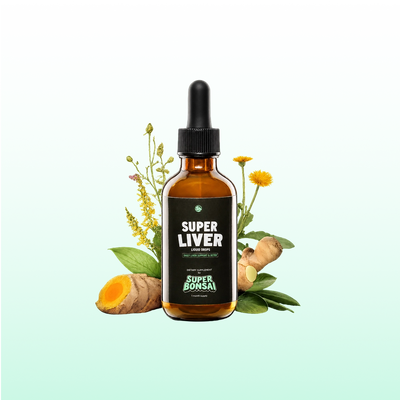
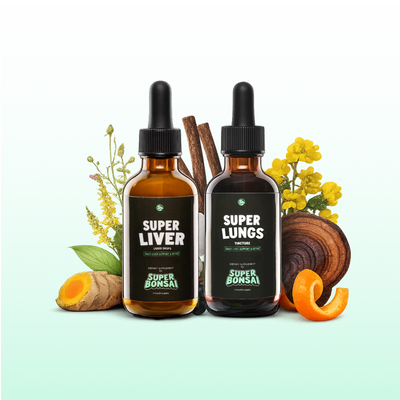
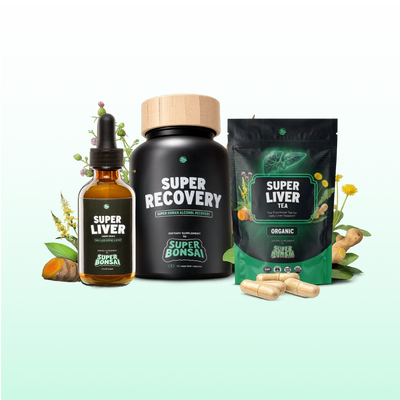
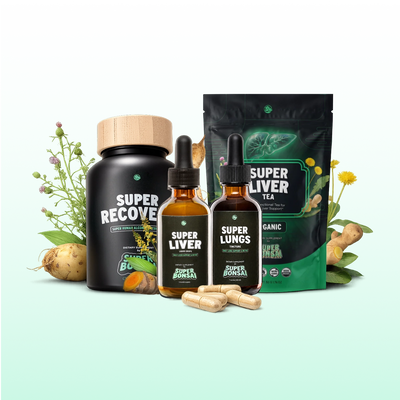
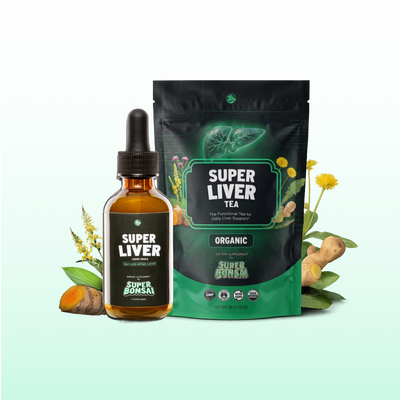
Super Liver by SuperBonsai combines all seven of these herbs in a concentrated liquid tincture, manufactured in the USA in an FDA-regulated, GMP-certified facility with third-party testing.
How to Take Milk Thistle Liquid Drops
- Take sublingually or in a drink. Place drops under the tongue for faster delivery, or mix into water, juice, or a morning beverage.
- Take with food. Silymarin absorption may improve when taken with a meal containing some fat, since it's fat-soluble.
- Be consistent. Herbal supplements work best with daily use over time — most studies showing liver enzyme support ran for 8–12 weeks.
- Follow label dosing. Concentrations vary significantly across products — don't assume one brand's serving size applies to another.
Frequently Asked Questions
What are milk thistle liquid drops used for?
Milk thistle liquid drops are used to support healthy liver function and antioxidant defense. According to the NCCIH, silymarin has been studied for benefits including its antioxidant, anti-inflammatory, and liver cell-supportive properties.
How long does it take for milk thistle drops to work?
Most silymarin research runs 8–12 weeks. According to the review (PMID: 30080294), consistent daily use over several months is typical in studies showing liver enzyme improvements. Individual results vary.
Are milk thistle liquid drops better than capsules?
It depends on the formula. Liquid drops may absorb more efficiently than basic capsules. However, a well-made capsule with a phospholipid complex can outperform a low-quality tincture. The extraction method and silymarin concentration matter most.
Is milk thistle safe for daily use?
According to the NCCIH, milk thistle is generally well tolerated in healthy adults for daily oral use. The most common side effects are mild gastrointestinal (bloating, nausea). People with plant allergies (ragweed, chrysanthemum, daisy family) and those taking prescription medications should consult their healthcare provider first.
What should I look for on the label?
Silymarin mg per serving, extraction ratio or concentration, third-party testing certification, and full ingredient disclosure with individual amounts.
Disclaimer: These statements have not been evaluated by the Food and Drug Administration. This product is not intended to diagnose, treat, cure, or prevent any disease.