
If you've swapped your coffee for a caffeine-free alternative, you've probably crossed paths with chicory root already. The roasted taproot has stood in for coffee for centuries, but the reason it keeps showing up in wellness conversations now has less to do with flavor and more to do with fiber.
Chicory root is one of the richest natural sources of inulin, a prebiotic fiber that feeds the beneficial bacteria in your gut. That single fact shapes how your digestion runs and how a balanced microbiome supports your liver. Here's how the pieces fit together.

What Chicory Root Actually Is
Chicory root comes from Cichorium intybus, the same plant behind old-fashioned coffee substitutes. The taproot itself is remarkably fiber-dense, with a large share of that fiber taking the form of inulin. That concentration is what sets the root apart from other vegetables.
People have used chicory for a long time. Ancient Egyptians and Romans turned to it for liver and digestive support, and its life as a coffee substitute took off during 1800s shortages when roasted root stretched scarce beans. The modern case rests on what fiber research has shown.
One thing to clear up early: the root is not the same as the leaf. Belgian endive, radicchio, and the frilly greens you might see labeled "chicory" come from related plants, but the prebiotic story lives in the deep root. If you're searching for fiber and gut benefits, the root is the form you want.
Three active fractions matter here. Inulin is the prebiotic fiber. Chlorogenic acid is a polyphenol that carries antioxidant activity. Sesquiterpene lactones are the bitter compounds that give chicory its edge.
The Inulin Connection: How Chicory Feeds the Gut
Inulin is a fermentable prebiotic, which means your body can't break it down the way it handles most carbohydrates. It passes through your small intestine intact and reaches the colon, where your gut bacteria treat it as fuel. That fermentation is the whole mechanism behind chicory's benefits.
A quick distinction, since it trips people up: a prebiotic is not a probiotic. Chicory doesn't add bacteria to your gut. It feeds the beneficial bacteria you already have, which lets certain populations grow.
The Bifidobacteria Effect
The best-supported outcome is a shift in which bacteria thrive. Chicory-derived inulin selectively increases Bifidobacterium populations, and often Lactobacillus alongside them. In one randomized trial, doses of 3g and 7g per day raised Bifidobacterium in healthy adults on low-fiber diets.
This is one of the more robust findings in prebiotic research, backed by multiple randomized human trials, and the direction of the effect holds up across independent studies. The size of the shift varies by dose, by the product used, and by where a person's microbiome started.
Short-Chain Fatty Acids and Why They Matter
When your gut bacteria ferment inulin, they produce short-chain fatty acids: acetate, propionate, and butyrate. These compounds nourish the cells lining your gut and help regulate inflammation. They're the payoff that turns fiber into something your body can use.
Not every study shows the same shift in each acid, so it's more accurate to think of SCFAs as a class of beneficial byproducts than to expect a jump in any single one.
The dose that produces them varies too. Studies have observed benefits across a wide range of daily doses, so your results depend partly on how much you take in consistently.
Fermentable fiber often causes gas or bloating when you introduce it too fast. The fix is simple: start with a small amount and build up gradually so your gut has time to adjust.
Chicory Root and Digestive Regularity
If you're wondering whether chicory root helps with regularity, the human evidence points to yes. In trials, chicory inulin improved stool frequency and consistency in people who started with low regularity, including older adults taking around 10g per day over several weeks.
Regularity benefits show up with consistent daily intake rather than after a single serving, which fits the broader pattern of how prebiotic fiber works.
The Gut-Liver Axis: Where Chicory Supports Liver Health
Your gut and liver are in constant communication through what's called the gut-liver axis. Blood from your intestines travels directly to your liver through the portal circulation, carrying whatever your gut lets through. A balanced microbiome and an intact gut barrier reduce the inflammatory and metabolic load that reaches your liver along that route.
When that barrier weakens, more bacterial byproducts slip into circulation and reach the liver, which is why gut health and liver health are hard to separate. Keeping the microbiome fed and balanced is one of the more practical levers you have.
This is where chicory's earlier benefits connect. The short-chain fatty acids from fermentation reach the liver through the portal circulation and act on hepatic metabolism. More SCFAs and a healthier gut barrier form a plausible route by which prebiotic fiber supports healthy liver function.
What the Evidence Currently Shows
The evidence deserves a precise read. The gut, regularity, and microbiome effects rest on human randomized trials. The direct liver effects are earlier-stage: animal models show favorable shifts in hepatic lipid metabolism and inflammatory markers, while human liver-specific data is still emerging.
Put together, chicory root fits a picture of daily, consistent support for your body's own detoxification and metabolic pathways. It isn't a compound that flushes or cleanses your liver on demand, and understanding why matters.
What Liver Support Actually Looks Like
Your liver works continuously. It processes compounds through defined enzymatic pathways around the clock, and it doesn't hold a backlog of "toxins" waiting to be purged. That's the misconception behind most crash-cleanse marketing.
The distinction that matters is between quick fixes and sustained habits. A three-day juice flush promises to reset your liver on a schedule your liver doesn't run on. What helps the liver do its ongoing work is steady: adequate fiber, hydration, sleep, limiting alcohol, and botanical support taken consistently.

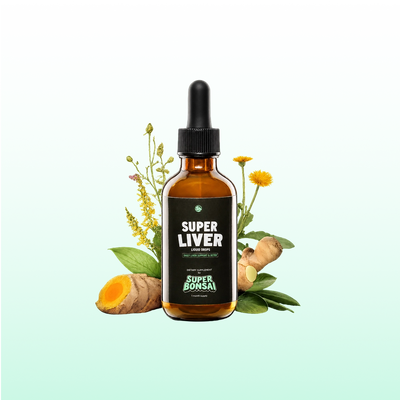
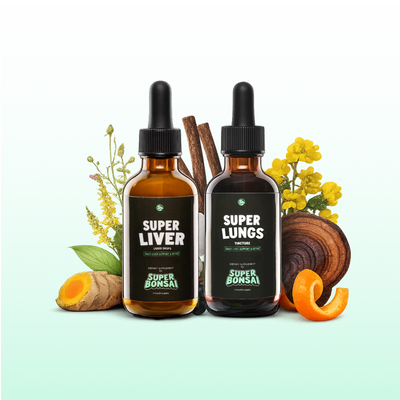
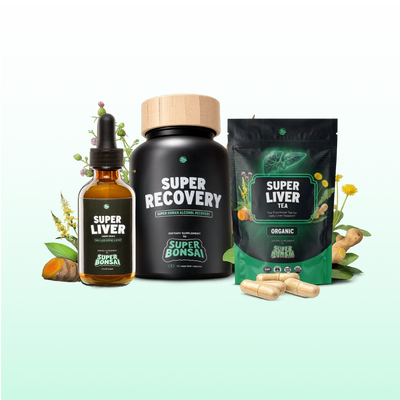
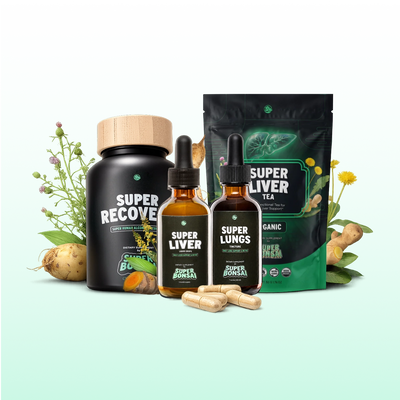
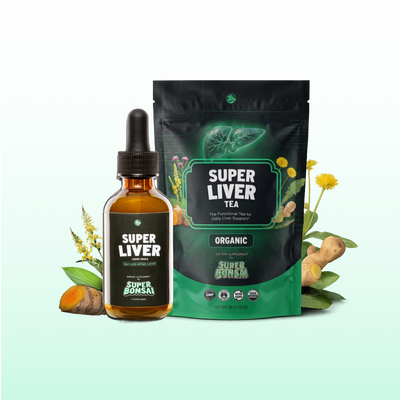
That's the approach behind formulations like our Super Liver and Super Liver Tea lineup. They pair botanical ingredients with daily habits rather than promising a one-time flush, which matches what the liver responds to.
Chicory contributes its prebiotic fiber, while milk thistle, another botanical in these formulas, is valued for its silymarin content, and berberine supports metabolism and healthy ALT levels. Each plays its own distinct role.
Beyond Gut and Liver: Other Chicory Root Benefits
Chicory's benefits extend past digestion and the gut-liver connection. A few areas have enough research behind them to mention, though none carries the weight of the microbiome findings.
Blood Sugar and Metabolic Markers
Because inulin slows how quickly carbohydrates move through your digestive tract, researchers have looked at how it affects blood sugar response. Findings are mixed across studies, so chicory belongs in the category of supportive dietary fiber rather than anything more.
Satiety and Weight Management
Because fiber slows digestion and adds bulk, chicory can increase feelings of fullness. That fullness effect has been studied over periods of several weeks, and it depends heavily on the rest of your diet.
How to Get Chicory Root: Food, Fiber, and Formulas
If you want to add chicory root to your routine, you have a few ways to get there, depending on how hands-on you want to be:
1) Whole foods
Roasted chicory root coffee is the classic entry point, and other inulin-rich foods round it out: Jerusalem artichoke, garlic, onion, and asparagus all deliver similar fiber. The catch is that inulin content shifts with how the food is stored and cooked, so the dose you get is hard to pin down.
2) Inulin powders
These isolate the fiber on its own, which gives you the most control over how much you take. They mix easily into water, coffee, or a smoothie, so they slot into whatever you already drink each morning.
3) Botanical formulas
These combine chicory with other ingredients, like dandelion root. Chicory shows up in liver-support blends specifically because it brings fiber, polyphenols, and bitters together in a single botanical.

Our Super Liver and Super Liver Tea pair chicory with complementary botanicals, which is one option to weigh against food-first and single-fiber approaches. You can browse the full range of formulas to compare.
On dosing, studied ranges run from about 3g up to 12g or more per day. Whatever form you choose, start low and go slow to manage tolerance, since that gas-and-bloating adjustment period is real.
A few people should check with a clinician first: anyone with FODMAP sensitivity, a ragweed or Asteraceae allergy, or who is pregnant.
Making Chicory Root Part of a Daily Routine
Chicory root's value rests on the strength of its inulin. The prebiotic fiber feeds your gut bacteria, those bacteria produce short-chain fatty acids, and that chain of effects supports digestion, regularity, and, through the gut-liver axis, your liver's ongoing work.
The realistic way to use it is the same way it works best: consistently, at a dose your gut tolerates, as one part of the daily habits that keep your liver and digestion running well.
Disclaimer: These statements have not been evaluated by the Food and Drug Administration. This product is not intended to diagnose, treat, cure, or prevent any disease.