

You probably grew up calling it a weed. The same plant you pulled out of the lawn turns up in health-food aisles as a tea, with a long list of promised benefits attached to it. So where does dandelion tea actually fit in a daily wellness routine?
Dandelion has real history as a traditional botanical, and some of its uses hold up better than others. This guide walks through what the evidence shows for liver support, digestion, and a few other claims, where it fits into the broader picture of liver-support options, and how to brew it well.

What Dandelion Tea Actually Is
Dandelion tea comes from Taraxacum officinale, the same common plant most people recognize from sidewalks and backyards. The herbal infusion is made from one of three usable parts: the leaf, the root, or the flower.
The part matters more than most people expect. Leaf tea tends toward grassy and bitter, carrying bitter glycosides, potassium, and polyphenols. Roasted dandelion root brews into a darker, earthy drink that gets used as a caffeine-free coffee substitute, and it carries inulin, a prebiotic fiber.
That split causes the most common confusion. When someone says “dandelion tea,” they might mean a light leaf tisane or a roasted-root “coffee.” Because the compound profile shifts with the part used, the benefits below map to the preparation, so it helps to know which one you are drinking.
One honest note before the benefits. Dandelion is a traditional herb with a mix of human, mechanistic, and animal evidence behind it. The strength of that evidence varies by claim, so this guide flags it as it goes rather than overselling a single verdict.
Dandelion Tea Benefits the Research Supports
Most of dandelion’s reputation rests on traditional use and early-stage research. Here is what each commonly cited benefit looks like when you check it against the evidence.
Liver and Bile Flow
Dandelion has a long history as a bitter and a choleretic, meaning a substance thought to stimulate bile flow. There is mechanistic plausibility here: bitter compounds can prompt digestive secretions, and bile supports the breakdown of fats.
The caveat is real, though. Strong human trials on liver outcomes are limited, and most of the supporting data comes from animal or mechanistic studies rather than large clinical work.
Digestion and Appetite
The same bitter compounds that link dandelion to bile are also tied to digestive comfort. Inulin from the root, opens in a new tab acts as a prebiotic fiber, feeding gut bacteria.
Traditional herbalism has used dandelion as a digestive bitter for centuries, though that traditional use is not the same as a proven clinical effect, and the human research remains thin.
Mild Diuretic Effect
“Natural diuretic” is the single most common phrase attached to dandelion, and it has some support. One small human study found that dandelion leaf increased urinary frequency over a short window. This is a fluid-balance effect, not a way to flush toxins from the body, and the research is short-term.
If you have noticed dandelion linked to water retention or bloating, this is the mechanism people are pointing to.
Antioxidant and Anti-Inflammatory Compounds
Dandelion contains polyphenols, flavonoids, and other compounds with measured antioxidant activity against free radicals and oxidative stress. The honest reading is that in-vitro and animal antioxidant activity does not automatically translate to a clinical benefit at the doses you get from a cup of tea. The compounds are real; the leap to a guaranteed health outcome is not.
Blood Sugar and Metabolic Signals
You will see dandelion mentioned for blood sugar and insulin sensitivity. This rests on early preclinical interest, mostly animal work. Human evidence is not yet established, so this one belongs in the “people search it, here is the honest status” category rather than among the better-supported uses.
Across all of these, the framing stays the same. Dandelion may support normal functions like digestion and fluid balance.

How Dandelion Supports Healthy Liver Function
To understand where dandelion fits, it helps to know what “liver support” actually means. Your liver is an always-on processing organ. It filters blood, metabolizes compounds, and produces bile continuously, and it does this work best when supported by consistent habits like hydration, a reasonable diet, and steady botanical inputs.
A common misconception is that the liver stores up a backlog of toxins, waiting for something to flush them out. That is not how the organ works. It clears compounds on an ongoing basis rather than warehousing them for a periodic purge.
That distinction reframes dandelion’s role. It is a supportive botanical that fits a daily-habits picture through bile and digestion support and polyphenol intake. It is one input among many, not a single-handed fix.
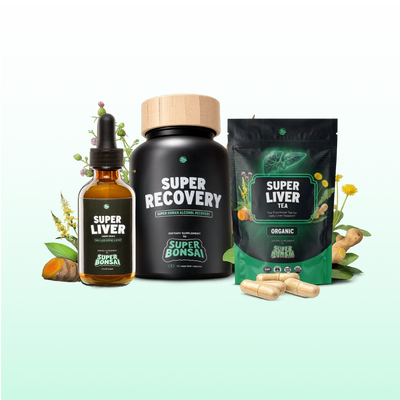
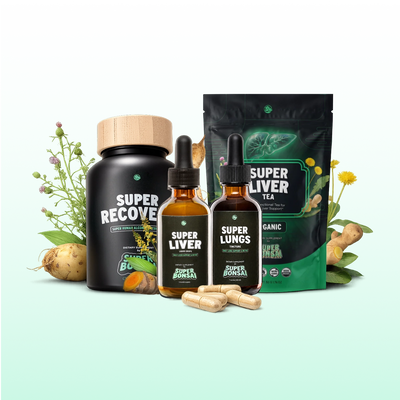
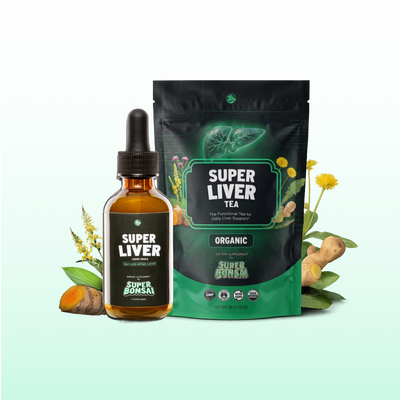
This is also how dandelion show up in a formulated product. Our liver detox tea uses dandelion as one botanical within a daily-support blend, an example of pairing the herb with a consistent routine rather than relying on it alone. The point of the mechanism is the habit, not any one ingredient. Drinking dandelion root tea on its own can also help support your liver, or you can try other liver detox drink recipes made with natural ingredients.
Daily Liver Support vs. the One-Time “Cleanse” Fad
Search “dandelion detox” and you will find two very different ideas wearing the same word. One is the crash cleanse: a short, intense juice or tea protocol that promises to purge accumulated toxins on demand. The other is consistent daily support of the body’s own pathways. They are not the same, and the difference matters.
The crash model does not match how the body works. Your liver and kidneys clear compounds continuously, so a weekend flush is not unlocking some backlog. A sustainable approach looks unglamorous by comparison: steady hydration, fiber, limiting how much you ask your liver to process, and consistent botanical support over time.
So does a dandelion detox work? If “detox” means a one-time purge, that framing oversells what any tea can do. If it means supporting your body’s everyday processing with good habits, then dandelion can be a reasonable part of that routine. This is also why a ready-made daily format like Super Liver Tea fits the support side of the line rather than the cleanse side.
One caveat worth stating plainly. Dandelion tea is a supportive habit, not a corrective for heavy drinking or an existing liver condition, and it does not make alcohol consumption safe or consequence-free. If that is the concern, a daily routine like the Detox Bundle is still about support, not repair.
Dandelion vs. Other Liver-Support Botanicals
If you’ve been looking into dandelion you’ve likely had a few other botanicals on the list as well. Here is how it sits next to the botanicals it is most often searched alongside, framed as orientation rather than a ranking.
-
Milk thistle: Long associated with liver support, with silymarin as its signature compound. Our milk thistle liquid drops post goes deeper on that one.
-
Dandelion: A bitter botanical tied to bile flow and digestion, with traditional use and mechanistic plausibility behind it.
-
Ginger: Best known for digestive comfort, with a warming, pungent compound profile and a reasonable body of research on nausea.
-
Artichoke leaf: Another bitter associated with bile flow and digestion, often grouped with dandelion for similar reasons.
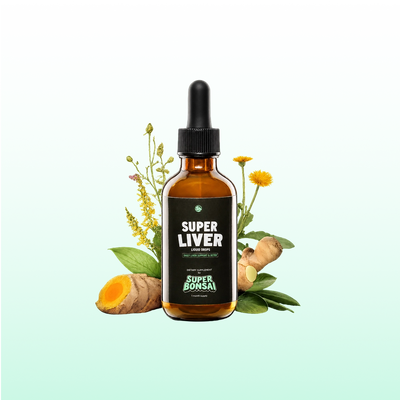
These botanicals do different jobs, and the human data behind each varies. That is nuance, not a scorecard. Super Liver, for example, pairs milk thistle, dandelion, and other botanicals precisely because they play complementary roles in a single formula rather than competing for the same one.
How to Brew and Drink Dandelion Tea
Brewing depends on which part you are using. Leaf tea is the lighter, grassier option, while roasted root makes the darker, coffee-like cup.
For dandelion leaf tea, steep dried leaves in just-boiled water for 3 to 5 minutes. For roasted dandelion root, use a longer steep of 5 to 15 minutes to pull out the deeper, earthier flavor. Roasting the root, typically low and slow in the oven, is what gives the root tea its toasty, less acidic character compared to coffee.
A few practical questions come up often. Dandelion tea is naturally caffeine-free, which is part of why the roasted root works as a coffee replacement. One to three cups a day is a reasonable range for most people. On taste, the bitterness is the main hurdle, and a little honey, lemon, or a pairing like ginger or peppermint can round it out.
For consistency, some people prefer a ready-made format over brewing from scratch each day. Super Liver Tea is one example of a daily-use preparation built around that kind of routine.
Who Should Be Cautious With Dandelion Tea
Dandelion is widely used, but it is not right for everyone. A few interaction and caution areas are worth knowing before you make it a daily habit.
Because of its diuretic activity, dandelion may interact with diuretic medications, lithium, and certain blood-sugar or blood-thinning drugs. Its potassium content is another reason to be mindful if you take medications affected by potassium levels. There is also an allergy consideration: dandelion belongs to the Asteraceae family, so people with ragweed or related plant allergies can experience cross-reactivity.
If you have an existing liver, kidney, or gallbladder condition, or if you are pregnant or nursing, talk to a clinician before adding dandelion tea. This is responsible practice with any new botanical, not a warning unique to dandelion.
Dandelion Tea FAQs
Is dandelion tea good for your liver?
It may support normal liver function as part of a daily-habits routine, mainly through its traditional role in bile flow and digestion. The strongest framing is supportive, not corrective, and the human evidence on liver outcomes is still limited.
Does dandelion tea detox the body?
Not in the crash-cleanse sense. Your liver and kidneys clear compounds continuously, so there is no backlog to flush. Dandelion can be a reasonable part of supporting that everyday processing through consistent habits.
How much dandelion tea per day?
One to three cups a day suits most people. As with anything new, start low, see how you respond, and keep it in moderation.
Are there side effects?
The main considerations are medication interactions, including diuretics, lithium, and blood-sugar or blood-thinning drugs, plus possible allergy cross-reactivity for people sensitive to ragweed and related plants. See the caution section above for detail.
Where Dandelion Fits
Dandelion tea is a traditional botanical best understood as a steady daily-support habit, especially for digestion, fluid balance, and liver-support routines.The clearest evidence points to a mild diuretic effect and a long history as a digestive bitter, with liver and antioxidant claims resting more on mechanism and early research than on large human trials.
The useful way to think about it is as one habit among several. Your liver does its processing work continuously, and it responds to consistent support rather than periodic flushes. Dandelion fits that picture as a daily input, whether you brew it yourself or reach for a ready-made format like Super Liver Tea.
If you drink it for the ritual and the gentle support, you are using it the way the evidence actually backs. Just keep expectations grounded, mind the interactions, and check with a clinician if you have a condition that warrants it.
Disclaimer: These statements have not been evaluated by the Food and Drug Administration. This product is not intended to diagnose, treat, cure, or prevent any disease.