
Milk thistle shows up in almost every liver-support conversation, and for good reason. The plant has been used for liver complaints for centuries, and modern research has spent decades looking at what its active compound actually does in the body.
That compound is silymarin, and most of what people mean by “milk thistle benefits” traces back to it. This guide walks through what silymarin is, how it supports your liver, what the evidence backs, and how to use it as part of a daily routine.
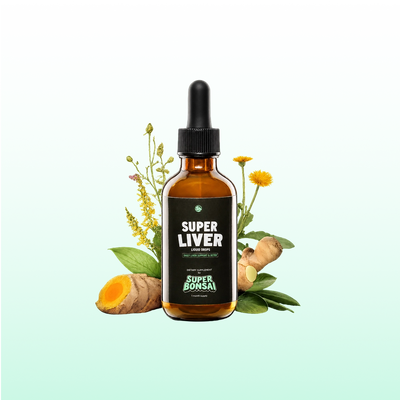
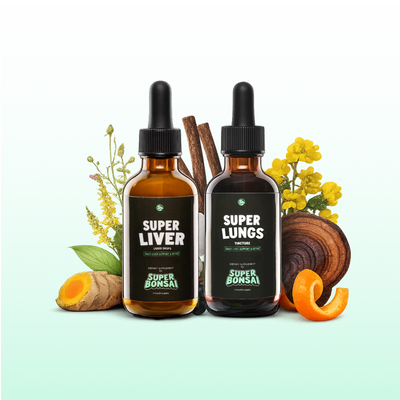
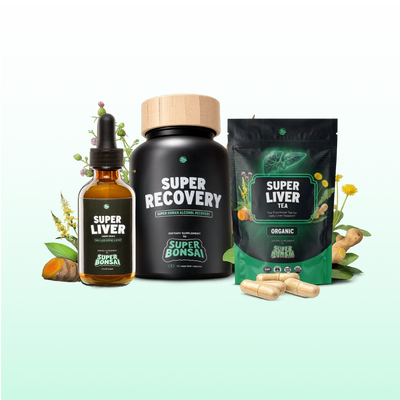
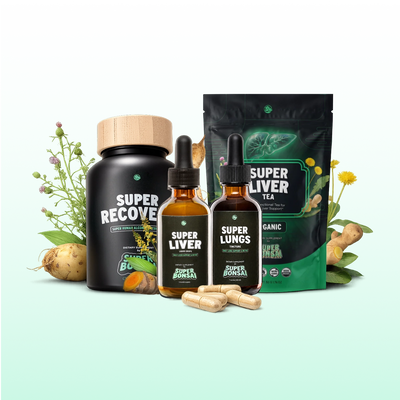
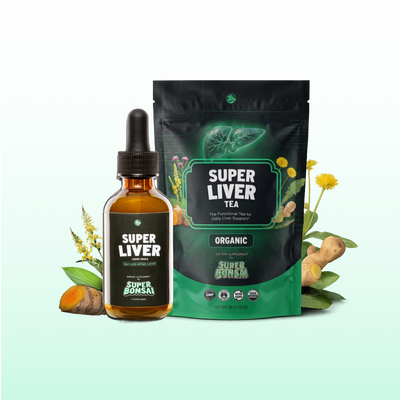
You can find milk thistle paired with other botanicals in our Super Liver product and across the full SuperBonsai lineup.

What Silymarin Actually Is
Milk thistle is a flowering plant, Silybum marianum, a member of the Asteraceae (daisy) family with distinctive white-veined leaves. The seeds are the part used in supplements, and they contain the compound that does the work.
Silymarin is the active ingredient: a complex of flavonolignans, which are a subgroup of the flavonoid family. It isn’t a single molecule. Silymarin contains several related compounds, opens in a new tab, including silybin (also written silibinin), isosilybin, silychristin, and silydianin, along with the flavonoid taxifolin.
Silybin makes up the largest share of the mix and is the most-studied fraction, which is why you’ll often see it discussed as the lead active compound. When a label says “standardized to silymarin content,” it’s telling you how much of this flavonolignan complex the extract actually delivers.
One practical note worth setting early: silymarin is poorly water-soluble, so absorption depends heavily on formulation and consistency. That detail matters later when we get to how you take it. Milk thistle is the kind of long-standing liver botanical that anchors formulas like Super Liver, where it works alongside other herbs.
How Milk Thistle Supports the Liver
The liver is a working organ. It processes compounds continuously as part of its normal job, which means it doesn’t sit on a backlog of toxins waiting for a flush to release them. That’s the first misconception to clear up, because it changes what “support” actually means.
Silymarin is described in the research as hepatoprotective, and the proposed mechanisms are specific. It acts as an antioxidant, helps stabilize hepatocyte (liver cell) membranes, and supports the liver’s own protein synthesis and regenerative pathways, opens in a new tab. These are everyday-function mechanisms, not a reset switch.
This is where the useful distinction lives. A crash juice-cleanse promising to purge accumulated toxins overnight is selling something the body doesn’t work that way. Consistent daily support of the liver’s normal pathways is a different proposition, and it’s the one botanical support actually fits.
So the honest frame is steady, not dramatic. Milk thistle is studied as something you give the liver room to do its regular work, day after day, rather than a one-time intervention.

The Evidence-Backed Benefits of Silymarin
Most of silymarin’s reputation rests on its antioxidant activity, and the benefits below build out from there. Human-outcome research on milk thistle is genuinely mixed, so each benefit comes with an honest read of how strong the evidence is.
Antioxidant and Cellular Protection
This is the best-supported part of silymarin’s profile at the mechanistic level. It scavenges free radicals and helps reduce oxidative stress on liver cells, and it’s linked to maintaining the liver’s glutathione, opens in a new tab, one of its key protective antioxidants.
Much of this work comes from laboratory and animal models, including studies measuring reduced oxidative stress markers, opens in a new tab and restored antioxidant enzyme activity. The mechanism is well-characterized; treat it as how silymarin works rather than a promise of a specific human outcome.
Support for Everyday Liver Function
Building on that antioxidant base, silymarin is studied for supporting normal liver function and resilience under routine metabolic load. The idea is steadiness, helping the liver maintain its normal balance as it handles whatever you put through it.
Here the caveat matters most. The National Center for Complementary and Integrative Health notes there isn’t enough high-quality evidence, opens in a new tab to draw firm conclusions about milk thistle’s effects in people. So this is structure and function support, not a treatment, and not something that offsets heavy drinking or a poor diet.
Skin and Antioxidant Spillover
Silymarin’s antioxidant behavior has drawn some interest beyond the liver, including topical research on protecting skin, opens in a new tab from UV-induced oxidative stress. This is a smaller, emerging area, and the work is largely topical and animal-based, which is a different route and population from oral liver use. Read it as early interest, not an established benefit.
Metabolic and Blood-Sugar Research
Some small human studies, opens in a new tab have looked at whether milk thistle affects metabolic markers, including blood sugar in people with type 2 diabetes. The findings are preliminary and come with real limits, and they aren’t a basis for clinical use. It’s an active research thread worth knowing about, nothing more settled than that.
The honest limits cut one way consistently. The legitimate thing to set straight is the crash-flush, “detoxes your body overnight” promise, not the idea of supporting the liver’s normal pathways over time. Milk thistle isn’t a hangover fix or a license to drink, and treating it as one misreads what the research actually shows.
Milk Thistle Compared to Other Liver Botanicals
Milk thistle rarely works alone in a well-built formula. It’s commonly combined with other liver-supporting botanicals, each of which is known for a different role, and the point is how they complement one another rather than which one outranks the rest.
-
Dandelion is a traditional liver and digestive botanical, often used to support bile flow and gentle daily liver function.
-
Artichoke (globe artichoke) is a frequent companion in liver formulas and is associated with bile support as well.
-
Turmeric brings its own antioxidant and anti-inflammatory profile to the mix.
These herbs get combined because they cover different ground, not because one carries the others. A formula like Super Liver pairs milk thistle with companion botanicals including dandelion and turmeric rather than leaning on a single ingredient, which is the more common approach in everyday liver support.
If you want to go deeper on milk thistle specifically, our post on milk thistle liquid drops covers the form-specific angle in more detail.
How to Take Milk Thistle for Liver Support
Because silymarin is poorly water-soluble, the form you choose and the consistency of your routine both matter more than any single dose. A standardized extract tells you how much silymarin you’re getting, which is the number to look for on a label.
Most commonly cited intakes for liver support fall in the range of a few hundred milligrams of silymarin per day, often split across the day and taken between meals. Consistency over weeks tends to be the operating principle, since this is daily support rather than an on-demand effect. Many people don’t notice anything immediate, and some research has looked at timelines stretching to a few months.
On forms, the trade-offs are straightforward:
-
Capsules and standardized extracts deliver a measured, concentrated amount of silymarin, which suits a daily routine where you want consistency.
-
Tea is a gentler, ritual-based option, though because silymarin doesn’t dissolve well in water, tea delivers less of the active compound than an extract.
That maps onto how the products are built. Super Liver works as a standardized milk thistle tincture option, while Super Liver Tea offers a gentle, ritual-based milk thistle tea for general liver support. The tea is liver support broadly, not an alcohol-specific product.
A few safety notes are worth flagging. Talk to a clinician first if you’re pregnant or breastfeeding, if you take medications metabolized by the liver, or if you have allergies in the ragweed and daisy (Asteraceae) family, since cross-reactivity is possible. These statements have not been evaluated by the FDA, and milk thistle is a liver supplement, not a treatment for any condition.

What Healthy Liver Support Actually Looks Like
Milk thistle is one input, not the whole picture. Meaningful liver support is a steady habit built from sleep, hydration, a reasonable diet, and moderation with alcohol, with a botanical like silymarin sitting alongside those basics rather than replacing them.
The framing that holds up is daily and consistent. Your liver doesn’t need an overnight flush to undo a backlog it isn’t actually holding. It does well when you support its normal work over time, which is exactly where a standardized milk thistle option, or a multi-herb formula, fits a routine.
That leaves you in a position to evaluate any option, including a SuperBonsai product, on honest terms.
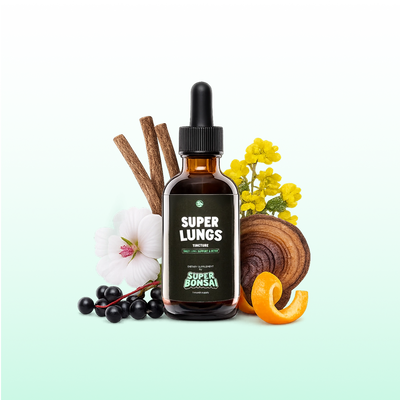
If you want to build a broader routine, our Detox bundle groups liver and lung support together. The science on silymarin is real and still developing, and the sensible way to use it is the same either way: consistently, as support, with clear eyes about what it does and doesn’t do.
Disclaimer: These statements have not been evaluated by the Food and Drug Administration. This product is not intended to diagnose, treat, cure, or prevent any disease.